How to Spot Signs of Mice in Your Home
Practical information for UK homeowners. Check product labels and follow current safety guidance.
How to Spot Signs of Mice in Your Home: 9 Common Signs to Look For
Some pages may contain affiliate links. As an Amazon Associate, Pest Directory earns from qualifying purchases.
Discovering signs of mice in your home can be unsettling. Mice are small, secretive rodents that can squeeze through surprisingly narrow openings and often remain unnoticed until they begin leaving evidence behind.
Fortunately, there are several tell-tale signs that can help you identify mouse activity. Small dark droppings, gnaw marks, scratching noises, damaged food packaging and nesting material are all common indicators that mice may be present.
In this guide, we’ll explain the most common signs of mice in your home, where to look for evidence and what steps you should take if you suspect a mouse problem.
9 Common Signs of Mice in Your Home
Mouse activity doesn’t always mean you’ll see a mouse directly. In many cases, the first indication is evidence left behind as they travel around your home searching for food, shelter and nesting material.
1. Mouse droppings
Mouse droppings are one of the most common signs of a mouse infestation.
They are usually small, dark brown or black and shaped like tiny grains of rice, often with slightly pointed ends. Fresh droppings may appear darker and slightly moist, while older droppings tend to become dry and dull.
You may find droppings:
- Inside kitchen cupboards
- Behind appliances
- Under sinks
- Along skirting boards
- Inside drawers
- Near food storage areas
- Around lofts and garages
The presence of droppings in multiple locations can suggest that mice are regularly travelling through the property.
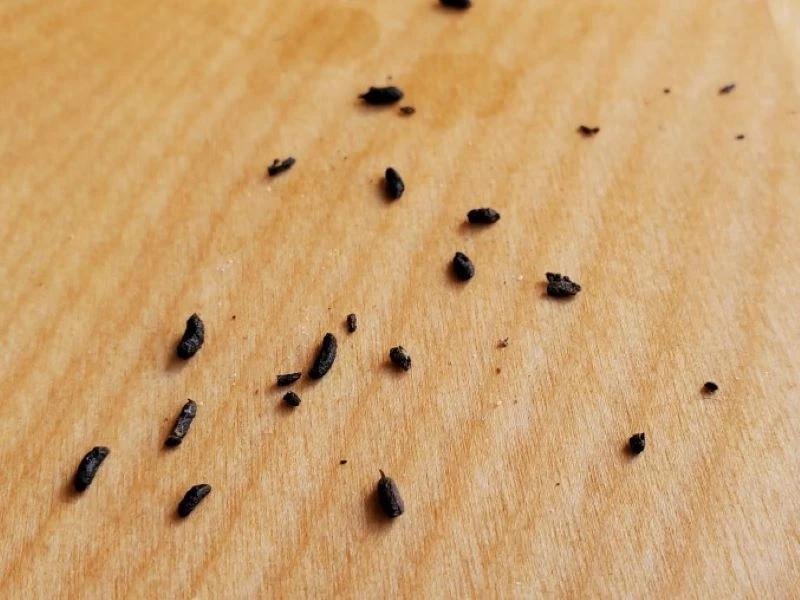
Mouse droppings are often one of the first visible signs of activity inside a property.
2. Gnaw marks on furniture, wood and packaging
Mice have continuously growing incisors and regularly gnaw on materials.
You may notice small bite marks on:
- Wooden skirting boards
- Cupboard doors
- Cardboard boxes
- Plastic food containers
- Electrical cable insulation
- Furniture
- Door frames
Gnaw marks may appear as small paired grooves or rough-edged damage.
Damage to electrical cables should be taken seriously because exposed or damaged wiring can create a potential fire or electrical hazard.

3. Scratching noises at night
Mice are often more active during quieter periods, which means scratching, scurrying or rustling noises may become noticeable at night.
Sounds may originate from:
- Inside walls
- Ceilings
- Loft spaces
- Behind kitchen units
- Under floorboards
- Around cupboards
Although mice are often associated with nighttime activity, they can also be active during the day, particularly when populations are established or food is readily available.
If noises repeatedly occur in the same area, it may be worth inspecting nearby voids, cupboards or access points.
4. Shredded nesting material
Mice build nests using soft, readily available materials.
Common nesting materials include:
- Shredded paper
- Cardboard
- Fabric
- Insulation
- Tissue
- Soft packaging
- Dry plant material
Nests are typically hidden in sheltered locations where mice can remain undisturbed.
Check behind stored items, inside cupboards, in loft spaces, garages and around areas where clutter has accumulated.
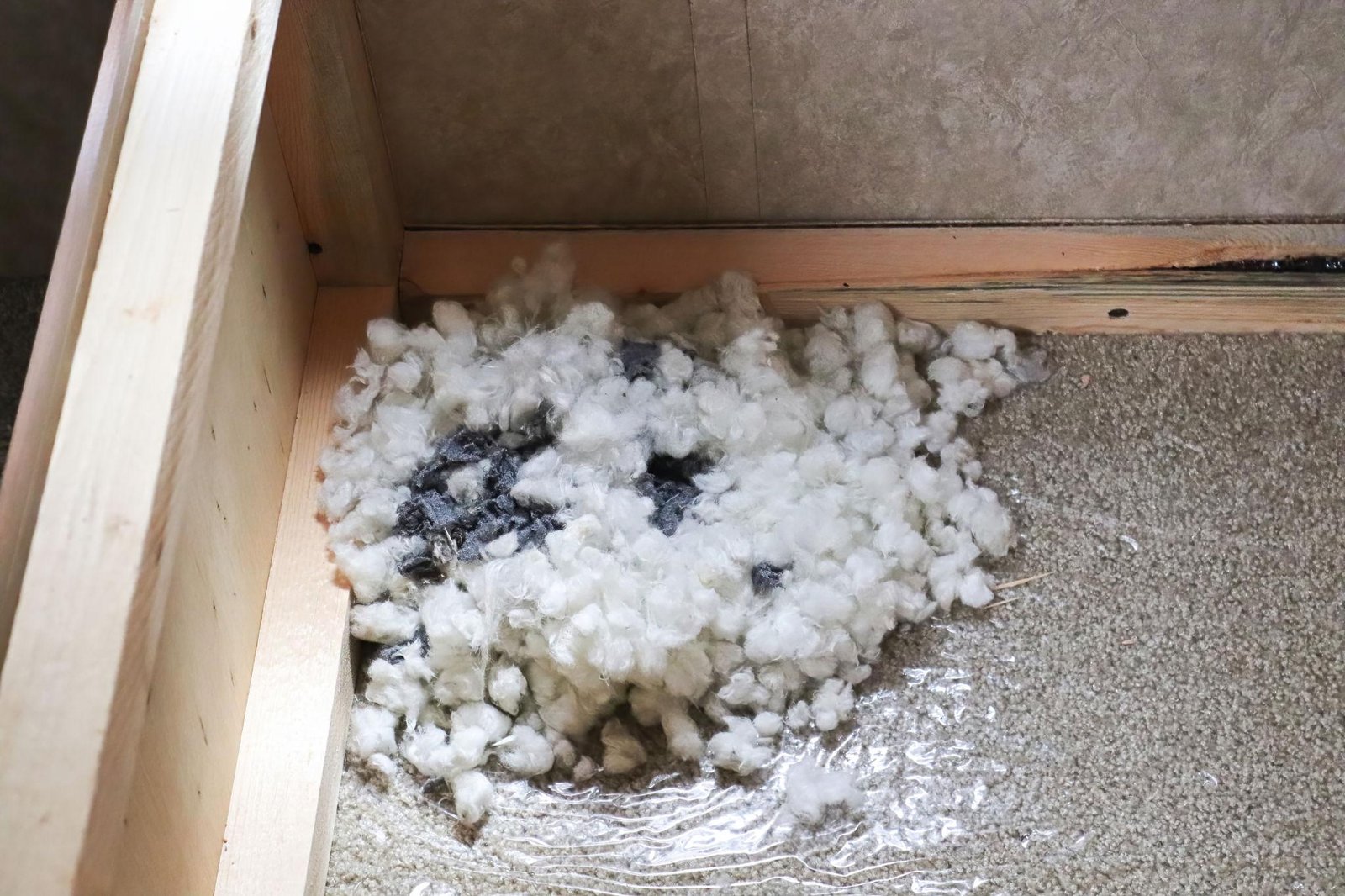
5. Unusual smells
A persistent, stale or musky smell may indicate rodent activity.
The odour can become more noticeable in enclosed areas such as cupboards, lofts, wall cavities or behind appliances.
A stronger smell may also occur where a rodent has died in an inaccessible location.
Odours alone cannot confirm mice, but when combined with droppings, gnawing or scratching noises, they can help indicate a problem.
6. Damaged food packaging
Mice are attracted to food and may chew through packaging to reach the contents.
Look for small holes, torn corners or damaged packaging in:
- Cereal boxes
- Pasta packets
- Rice bags
- Pet food
- Biscuit packets
- Bread packaging
Food that may have been contaminated by rodents should not be consumed.
Store dry food in secure, sealed containers and avoid leaving food waste or crumbs accessible overnight.
7. Grease marks and rub marks
Mice frequently travel along edges, walls and sheltered routes.
Over time, repeated movement through the same areas may leave subtle marks caused by dirt, grease or oils from their fur.
These marks may be noticeable around:
- Skirting boards
- Pipework
- Wall edges
- Gaps behind appliances
- Entry points
Rub marks are not always easy to identify, particularly in busy household areas, but they can provide useful clues when other evidence is present.
8. Mouse sightings
Seeing a mouse inside your home is a clear indication that a rodent has entered the property, although a single sighting does not necessarily tell you how many mice may be present.
Mice can move quickly and tend to avoid open spaces. They may be seen darting along walls, disappearing behind furniture or entering small gaps.
Seeing a mouse during daylight is not automatically proof of a large infestation. However, repeated sightings, particularly in different areas of the property, warrant further investigation.
9. Footprints or tail marks
In dusty, undisturbed areas, mice may leave small footprints or tail marks.
These can occasionally be visible:
- Behind appliances
- In loft spaces
- Along dusty surfaces
- In garages
- Around storage areas
If you suspect activity in a particular location, looking for fresh evidence over the following days may help establish whether mice are still present.
Where to Look for Signs of Mice
Mice tend to favour sheltered locations close to food, water and nesting opportunities.
If you suspect mouse activity, inspect the following areas carefully.
Kitchen
The kitchen is often one of the first areas worth checking because it provides food, water and sheltered spaces.
Inspect:
- Behind the fridge and freezer
- Behind the cooker
- Under kitchen units
- Inside cupboards
- Under the sink
- Around plumbing pipes
- Behind kickboards
Pay particular attention to gaps around pipework and the edges of cabinets.
Loft
Lofts can provide mice with warmth, shelter and nesting material.
Look for:
- Droppings
- Shredded insulation
- Damaged stored items
- Nesting material
- Gnaw marks
- Unusual smells
Avoid disturbing contaminated insulation unnecessarily. If contamination is extensive, professional assessment and cleanup may be appropriate.
Garage and utility rooms
Garages, utility rooms and storage areas can be attractive to mice, especially when they contain clutter, food, pet supplies or materials suitable for nesting.
Inspect cardboard boxes, stored belongings, shelves, corners and gaps around doors.
Around the outside of your home
Mouse activity may originate from external access points.
Check for:
- Gaps around pipes
- Damaged door seals
- Openings around utility services
- Gaps around air bricks
- Damaged vents
- Holes around foundations or external walls
Identifying how rodents are entering is an important part of preventing future activity.
Mouse Droppings or Rat Droppings: How to Tell the Difference
Mice and rats can leave similar signs, but their droppings are generally different in size and appearance.
| Feature | Mouse droppings | Rat droppings |
|---|---|---|
| Typical size | Small, around 3–6mm | Larger, often around 12–20mm |
| Appearance | Rice-like, often pointed ends | Larger, sausage-shaped |
| Colour | Dark brown or black | Dark brown or black |
| Common locations | Cupboards, kitchens, drawers | Lofts, sheds, garages, outdoor areas |
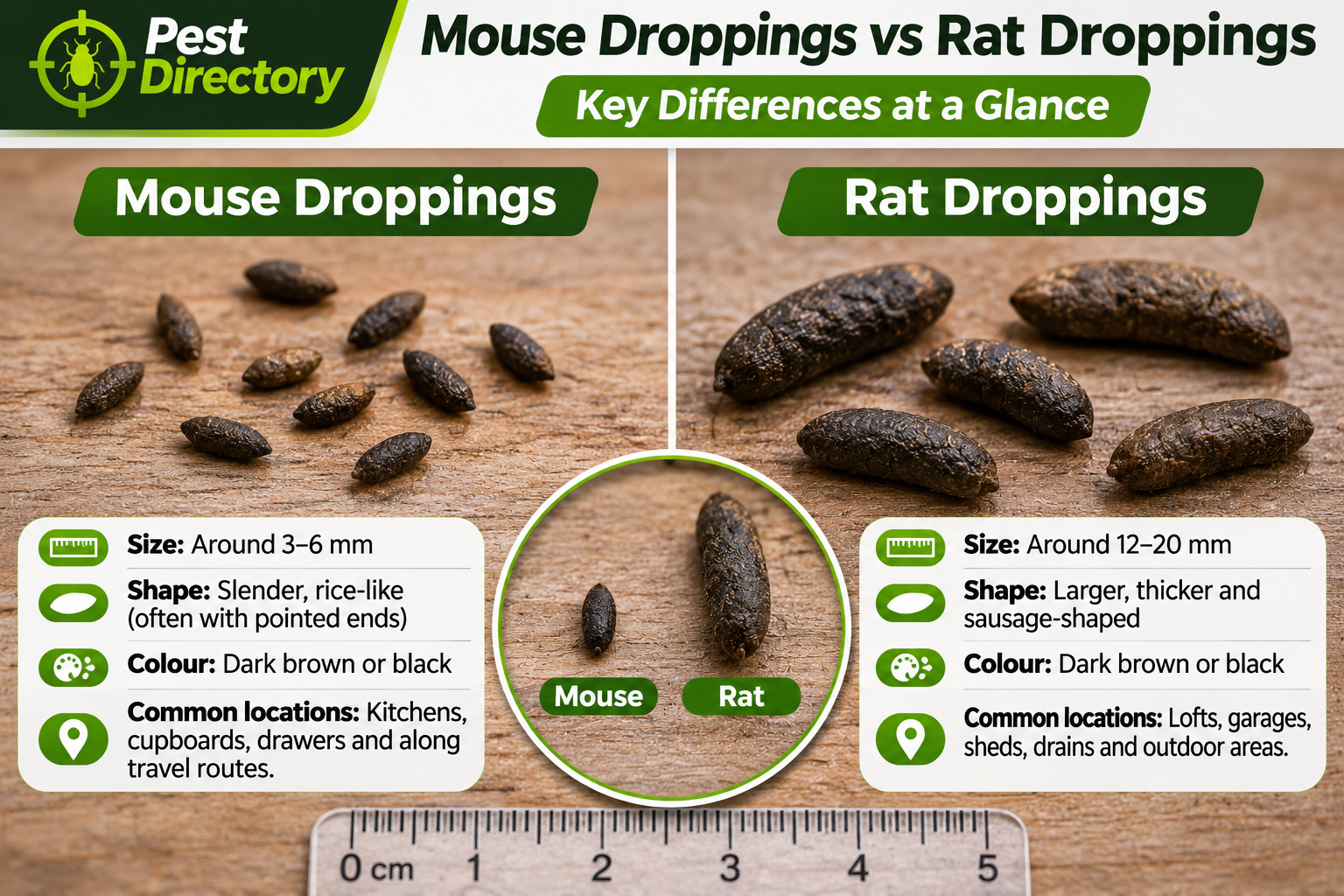
Size alone cannot reliably identify the species in every situation, particularly when droppings are old or damaged.
What to Do if You Find Signs of Mice
If you suspect mice in your home, there are several practical steps you can take.
1. Identify where the activity is occurring
Look for the areas where evidence is concentrated.
Droppings, gnaw marks, damaged packaging and scratching noises can help narrow down where mice are travelling.
Avoid disturbing suspected nesting areas unnecessarily.
2. Remove accessible food sources
Reducing access to food can make your property less attractive to rodents.
- Store food in sealed containers.
- Clean food spills promptly.
- Avoid leaving pet food out overnight where practical.
- Empty bins regularly.
- Keep food preparation surfaces clean.
- Secure rubbish.
3. Check for entry points
Look for gaps around pipes, doors, vents and external walls.
Mice can enter through surprisingly small openings, so inspecting the building carefully is important.
Suitable rodent-proofing materials may include metal mesh and appropriate sealing materials, depending on the location and building requirements.
Avoid blocking ventilation openings without ensuring that ventilation requirements are maintained.
4. Consider suitable mouse traps
If mice are present, traps may be an option for controlling activity.
Before purchasing a trap, consider:
- The type of trap
- Ease of setting
- Ease of cleaning
- Reusability
- Placement requirements
- Whether children or pets could access it
Any trap should be used in accordance with its instructions and positioned where it cannot be accessed by children, pets or other non-target animals.
Consider the Roshield Mouse Traps
5. Clean contaminated areas safely
Rodent droppings, urine and nesting material can potentially contain harmful microorganisms.
Avoid sweeping or vacuuming droppings or nesting material while dry, as this may disperse contaminated particles into the air.
Follow current public-health guidance for cleaning rodent contamination. Wear appropriate protective equipment and use suitable cleaning and disinfection products according to their instructions.
If contamination is extensive, particularly in loft insulation or inaccessible areas, consider using a qualified professional.
How to Prevent Mice From Returning
Preventing access and reducing the conditions that attract mice can help reduce the risk of future activity.
Seal gaps and openings
Inspect your home for potential entry points.
Pay attention to:
- Gaps around pipework
- Door gaps
- Damaged vents
- External wall openings
- Utility entry points
Use suitable materials for the location and avoid compromising ventilation or drainage.
Keep food properly stored
Food should be stored in containers that mice cannot easily access.
Cardboard and thin plastic packaging may not provide sufficient protection.
Reduce clutter
Clutter can provide shelter and nesting opportunities.
Keep storage areas organized and avoid leaving piles of cardboard, paper or fabric undisturbed for long periods.
Maintain bins and rubbish areas
Secure waste containers and ensure lids close properly.
Food waste should not be left accessible to rodents.
Inspect regularly
Periodically check lofts, garages, cupboards and other sheltered areas for new signs of rodent activity.
Early detection can make it easier to address a problem before it becomes more extensive.
Frequently Asked Questions
What is the first sign of mice in a house?
Mouse droppings are often one of the first signs homeowners notice. They may appear in cupboards, along skirting boards, behind appliances or near food storage areas.
Can you have mice without seeing them?
Yes. Mice are small, cautious rodents that often remain hidden. Droppings, gnaw marks, scratching noises and damaged packaging may reveal their presence before you see one.
Do mice come out during the day?
Yes. Although mice are often more active during quieter periods, they can also be active during daylight hours.
Does one mouse mean an infestation?
A single sighting does not establish the size of a rodent problem. However, it is worth investigating for additional signs, such as droppings, nesting material and entry points.
Where do mice hide in a house?
Mice may hide behind appliances, inside cupboards, in lofts, under floorboards, behind stored items and inside wall or ceiling voids.
How do I get rid of mice in my house?
Start by identifying areas of activity, reducing access to food, checking for entry points and considering suitable traps. If activity persists or the infestation is extensive, a pest-control professional may be able to help.
Final Thoughts
Spotting the signs of mice early can help you take action before the problem becomes more established.
Droppings, gnaw marks, scratching sounds, damaged food packaging and nesting material are all worth investigating. Once activity has been identified, reducing food access, checking potential entry points and using appropriate control methods can help address the problem.
If mouse activity continues, or you are unsure how extensive the problem is, consider seeking advice from a qualified pest-control professional.
Pest Directory — Identify. Understand. Protect.